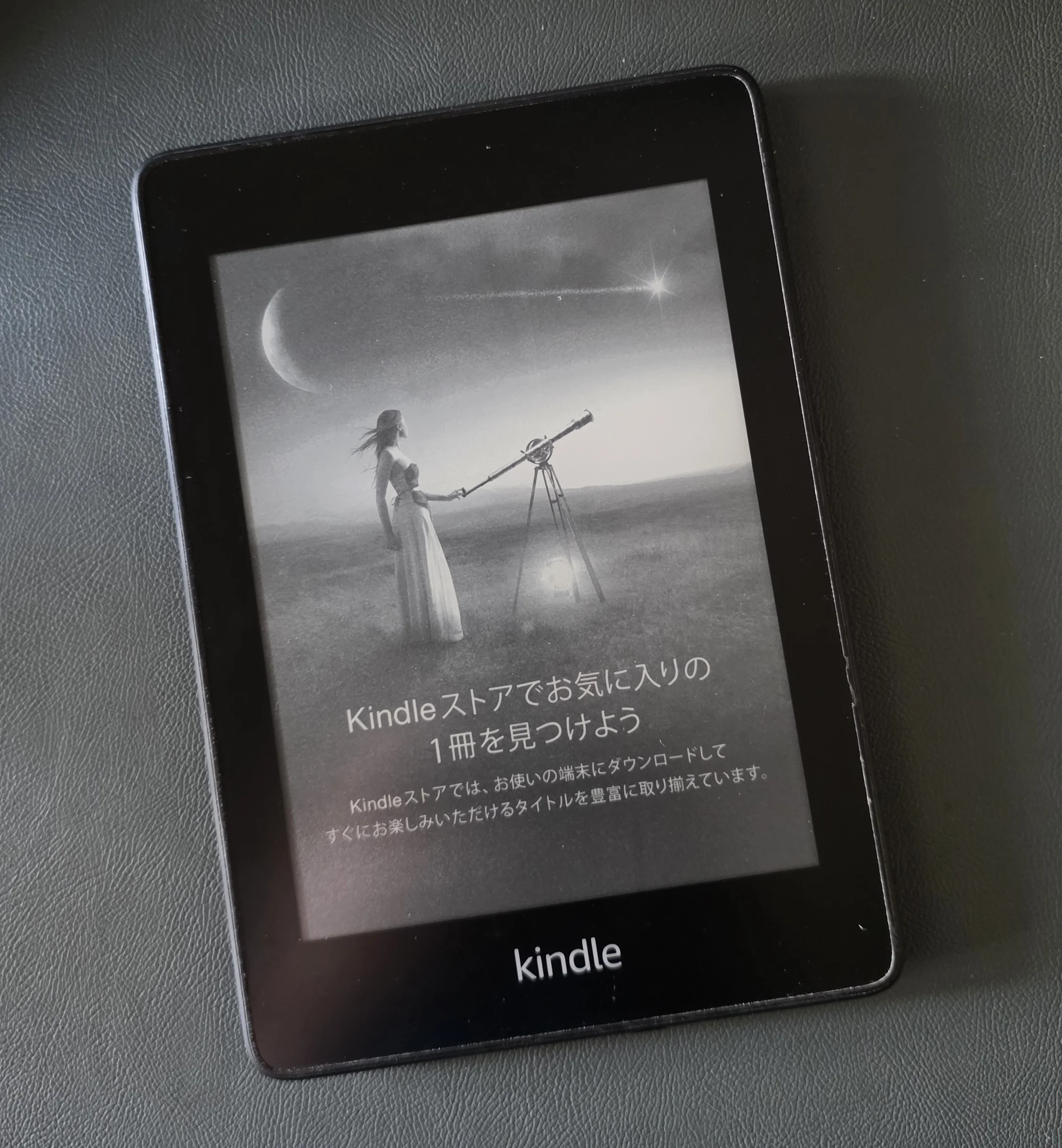
I bought this Kindle 5 years ago
Is this a coincidence, or is it a fated connection?
After finishing the first blog of this series, I happened to come across a Kindle in my desk drawer. It was one I had purchased five years ago; after using it a few times, I tucked it away in the drawer and hadn’t touched it since.
After five years without use or charging, I assumed the device was broken—but I decided to check it anyway. To my surprise, after charging and testing it, I found that it still functioned perfectly, just as it had five years ago—as if the last half-decade had simply vanished, leaving it exactly as it was yesterday. Given the nature of most digital devices today, this came as a genuine surprise.
“So, what shall I read?” - I asked myself.
“Ore wa Teppei” - the name popped into my head, completely unbidden. It’s a manga series I first read nearly 30 years ago, back when I was about 10 years old.
“Why not?” - I thought. So, I tracked down the series, downloaded it, loaded it onto my device, and began to read.
The same manga series, read twice—with a span of about 30 years between the two readings. When I was a 10-year-old boy, reading Teppei meant seeing only a mischievous, troublesome, and clever young lad. Back then, I was fascinated and curious about Japanese Kendo, eagerly following every match and every step of Teppei’s journey.
But now, as a man nearing 40, flipping through the pages reveals entirely different perspectives. I see a reflection of Japanese society, and I recognize the role that one’s environment and upbringing play in shaping character. Beneath the laughter lies a conflict between social norms and conventions on one hand, and the raw, natural instincts of a human being on the other. Throughout the series, the author employs striking contrasts and clashes: the wild, untamed wilderness versus the rigid structure of Japanese society; a boy living purely by instinct versus the discipline of Kendo, a practice rooted in strict etiquette. I can now perceive the aspirations of the characters—which, in truth, are the very aspirations and messages the author intended to convey.
After 30 years, the words and illustrations on the page remain unchanged; it is only we who have grown and evolved. And it seems that the story, too, has grown alongside its readers.
After a five-year hiatus, I have returned to my habit of reading on a Kindle. A hobby may lie dormant for years, but when the right circumstances arise, it can awaken once more.
P.S. “Ore wa Teppei” is a manga series created by artist Tetsuya Chiba, published in Kodansha’s Weekly Shonen Magazine from August 1973 to April 1980.